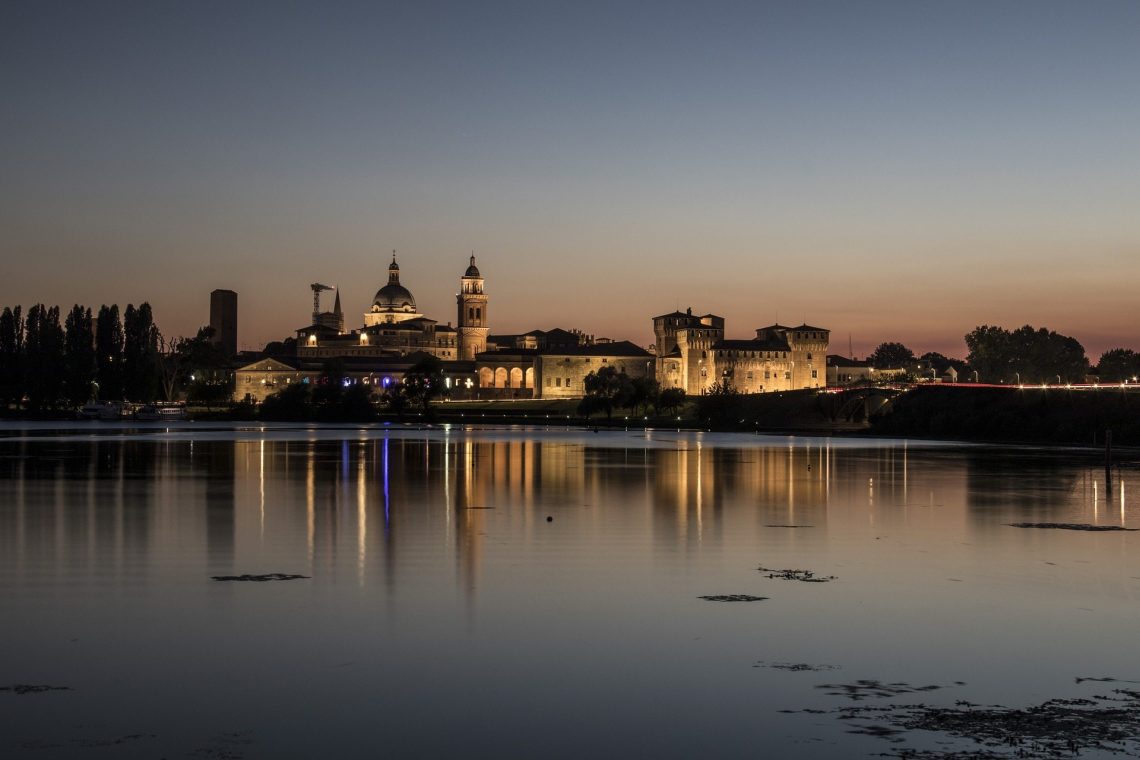
Beneath the surface of Lake Garda lie timber villages four thousand years old. A short way off, a five-pointed fortress stands in the middle of the water, a Roman theatre still holds performances, and the streets of one city fill with games handed down through generations. Around this lake, time has settled in layers, and in seven cases UNESCO has decided that the value belongs to everyone: five World Heritage Sites, a Biosphere Reserve that climbs from the shore to the Dolomites, and a living tradition. Only a short drive takes you from one to the next.
The seven recognitions in detail
- City of Verona — World Heritage Site, 2000
- Mantua and Sabbioneta — World Heritage Site, 2008
- Longobards in Italy. Places of Power (San Salvatore-Santa Giulia, Brescia) — World Heritage Site, 2011
- Prehistoric Pile Dwellings around the Alps — World Heritage Site, 2011
- Venetian Works of Defence between the 16th and 17th Centuries (fortress of Peschiera del Garda) — World Heritage Site, 2017
- Alpi Ledrensi e Judicaria Biosphere Reserve — UNESCO Man and the Biosphere programme, 2015
- Tocatì — Register of Good Safeguarding Practices for intangible heritage, 2022
Cities of art and power
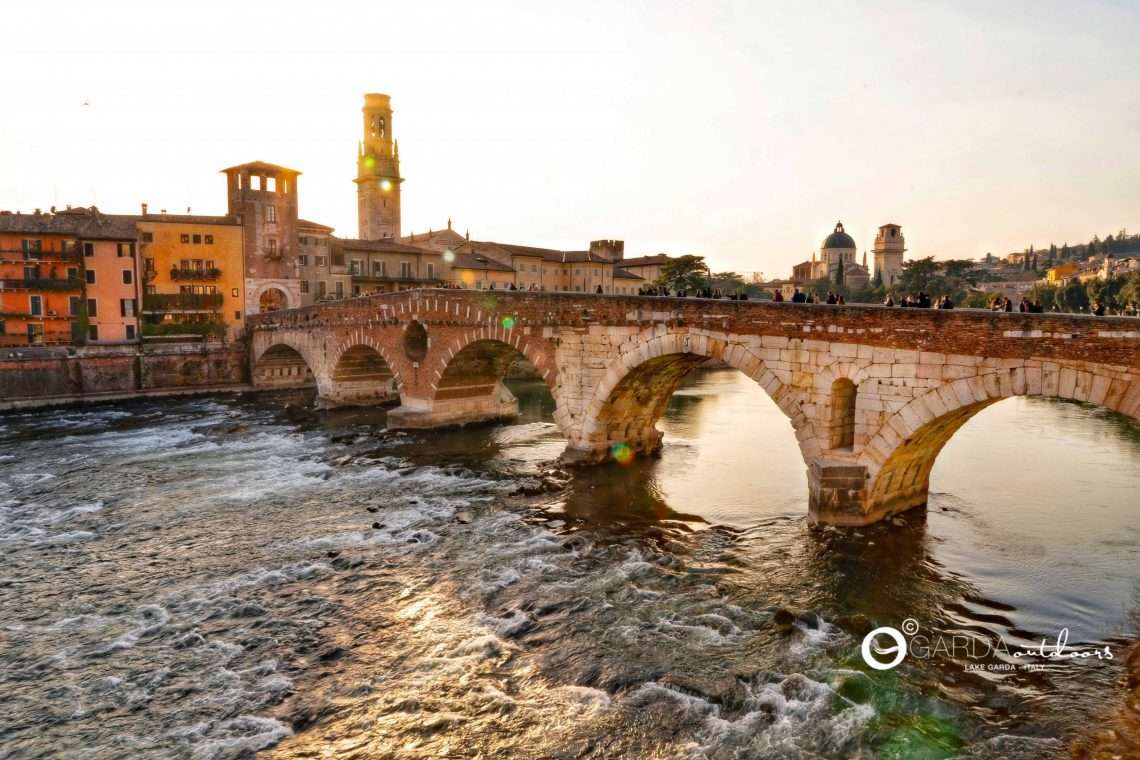
Begin with Verona, recognised for an urban fabric that has run unbroken for two thousand years. The Arena, the Roman theatre, Castelvecchio and the Scaliger tombs share the same few streets, one layer of history resting on another, still legible as you walk. To the south, where the lake gives way to the plain, you reach Mantua and Sabbioneta, listed together as a model of the Renaissance city. Mantua carries the mark of the Gonzaga family in the Palazzo Ducale and Palazzo Te, while Sabbioneta is the ideal city drawn from nothing, an idea of the Renaissance turned into geometry and stone.
Longobards and the Venetian Republic
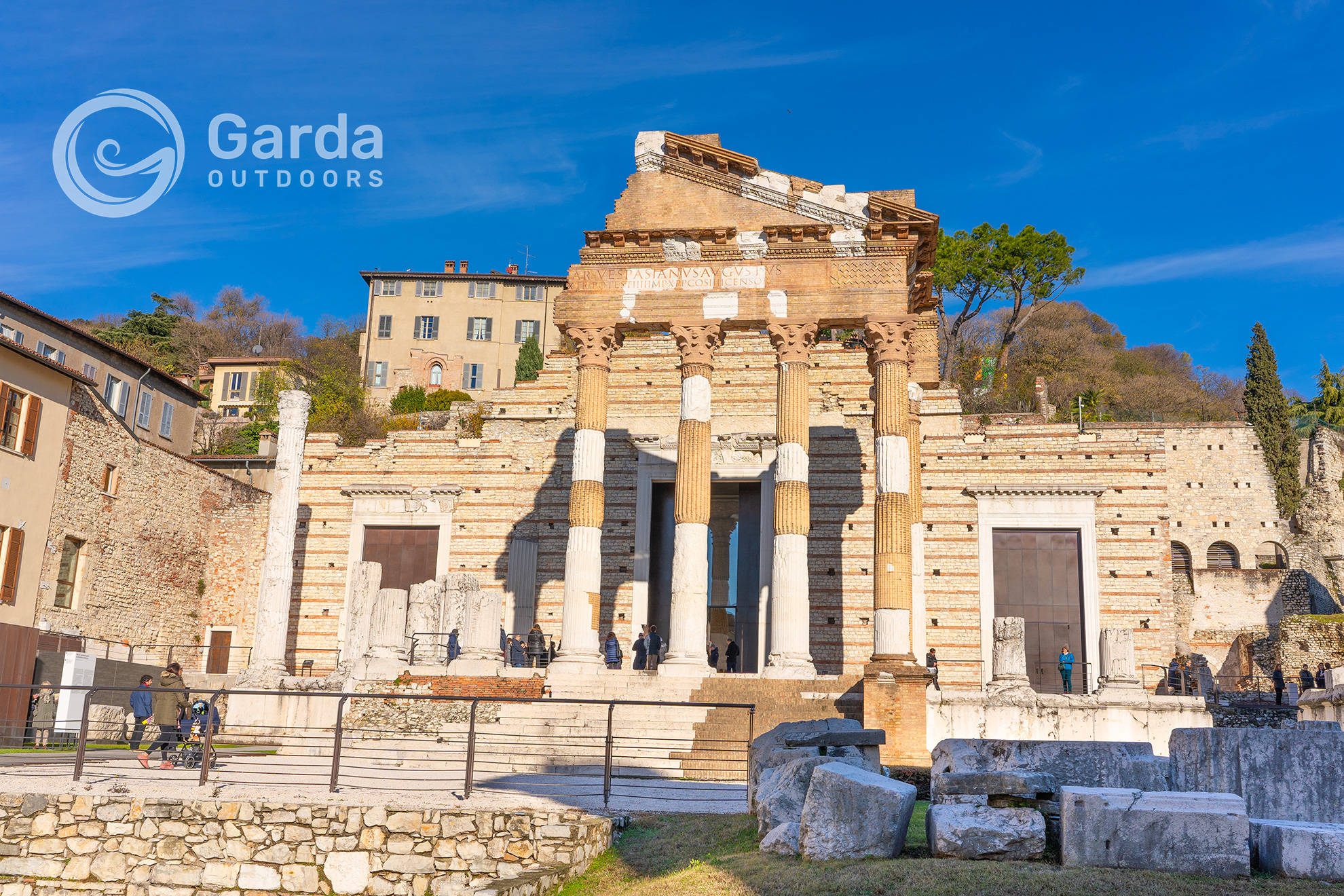
On the Brescia side, the monastic complex of San Salvatore-Santa Giulia preserves traces of Longobard rule, part of a serial site devoted to the seats of that people’s power. Move towards the shore and you meet another age of power: at Peschiera del Garda, the five-pointed fortress rising from the water of the river Mincio belongs to the Venetian Works of Defence. It is the one site of the seven that stands directly on the water, inside a small town you explore on foot.
The pile dwellings, prehistory rising to the surface
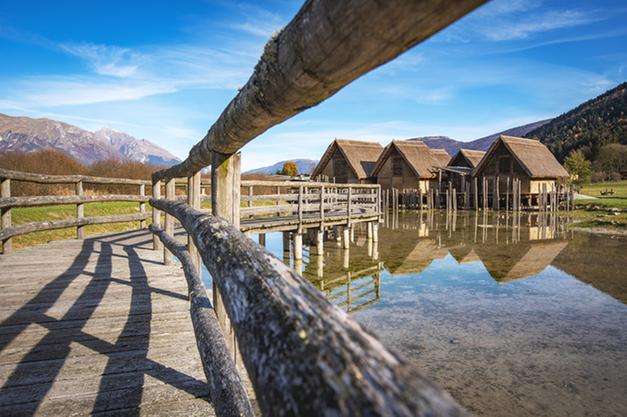
The most widespread recognition on Lake Garda is also the quietest. The Prehistoric Pile Dwellings around the Alps bring together one hundred and eleven villages chosen across six countries, several of them in the Garda basin, where whole Bronze Age communities built their homes on wooden platforms along the shores. What makes them remarkable is also why you will not spot them at a glance: the remains lie underwater or buried, and it is precisely the lack of oxygen that has preserved wood, cloth and seeds that would have vanished anywhere else.
✨ Live Lake Garda: Unique Experiences Handpicked for You
To meet them properly, head up into Trentino. The pile-dwelling museum at Lake Ledro reconstructs a village on the shore, and at Fiavé an archaeological trail brings one of the best-studied sites in the Alps back into view. On the lower lake, the Peschiera site remains the oldest and largest around Garda, though here the story is told through finds rather than by sight.
From Garda to the Dolomites, a single biosphere
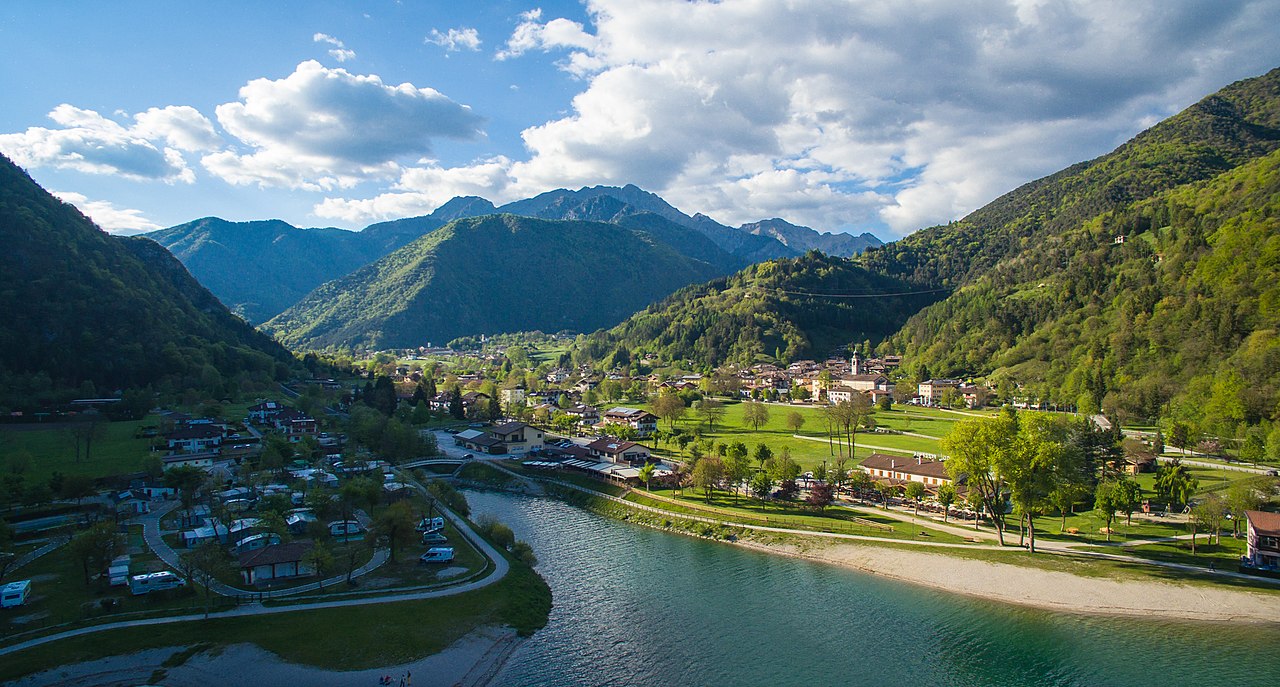
The sixth recognition is not a monument but an entire landscape. The Alpi Ledrensi e Judicaria Biosphere Reserve, part of the UNESCO Man and the Biosphere programme, covers a territory that rises in under thirty kilometres from the 63 metres of the Garda shore to the 3,173 of Cima Tosa, in the Brenta Dolomites. Within that climb sit olive groves, woods, high pastures and the wildlife of the Alps, bears, wolves and lynx among them. It is no coincidence that the Ledro and Fiavé pile dwellings survive in this same area: nature and prehistory share one boundary.
Tocatì, the heritage you play
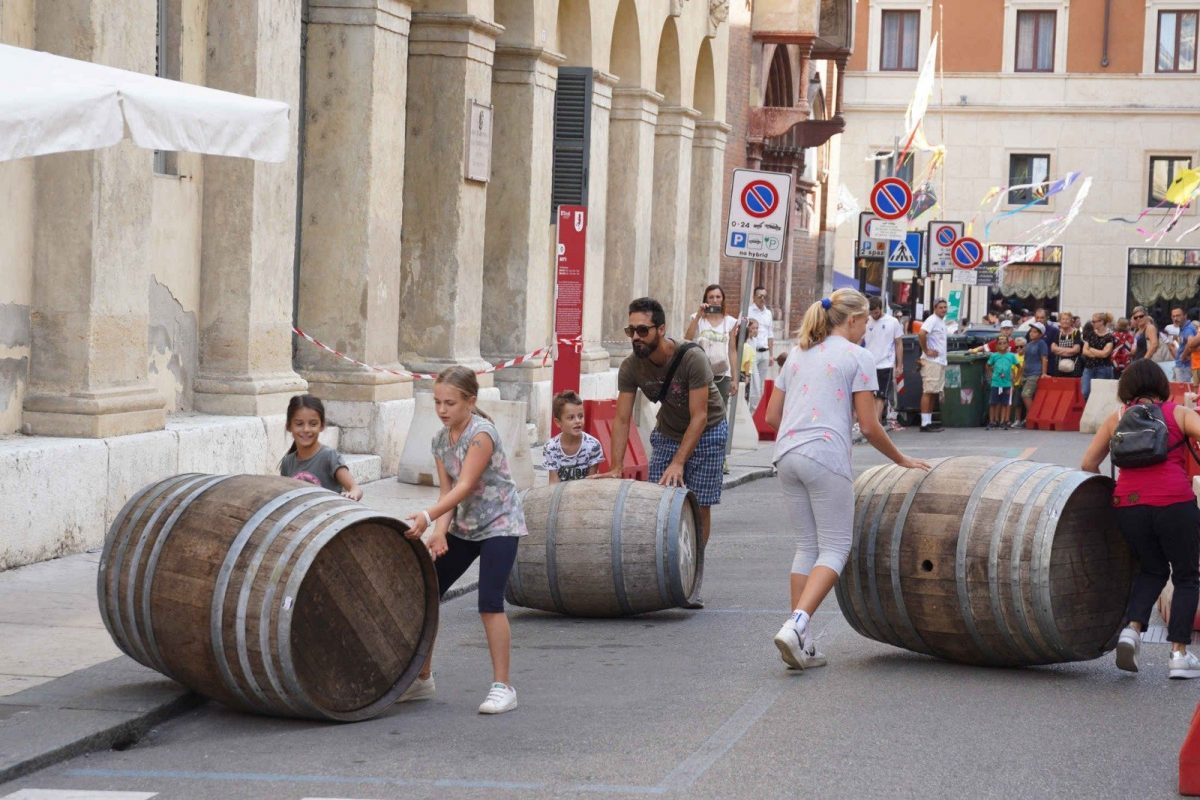
The seventh recognition is not visited but played. Tocatì, the first Italian entry on UNESCO’s register of good safeguarding practices for intangible heritage, began in Verona as a festival of traditional games and sports. For a few days the streets of the centre fill with more than fifty games from the Italian tradition, joined each year by those of a guest country, not a museum of the past but a community keeping handed-down rules and gestures alive. It is UNESCO’s way of saying that a living tradition, too, deserves protection.
When to enjoy the wonders of Garda
These seven places share an advantage: almost none depends on the August sun. A fortress, an archaeological museum, a Renaissance centre are at their best once the crowds thin out. Autumn and spring, on Garda, are the seasons of culture: the light is low and clear, the towns can breathe, and a single weekend is enough to combine a city of art, a prehistoric site and a walk through the biosphere. If you are looking for a reason to return when the lake slows down, its UNESCO heritage is the thread that ties the whole territory together, shore after shore.
Frequently asked questions
How many UNESCO sites are there at Lake Garda? The area has seven: five World Heritage Sites (Verona, Mantua and Sabbioneta, the Longobard sites of Brescia, the pile dwellings and the Venetian defences at Peschiera), the Alpi Ledrensi e Judicaria Biosphere Reserve, and Tocatì, a good practice for intangible heritage.
Is Lake Garda itself a UNESCO site? The lake itself is not on the World Heritage List. What is recognised are individual sites and programmes in the surrounding territory.
Can you visit the Garda pile dwellings? The original remains lie mostly underwater or buried. You encounter them at the museums of Ledro and Fiavé, in Trentino, where villages and archaeological trails have been reconstructed.
Which UNESCO site sits right on the lake? Peschiera del Garda, with its Venetian fortress, is the only one of the seven that stands directly on the water.